What to consider before buying a Chevy Silverado 1500
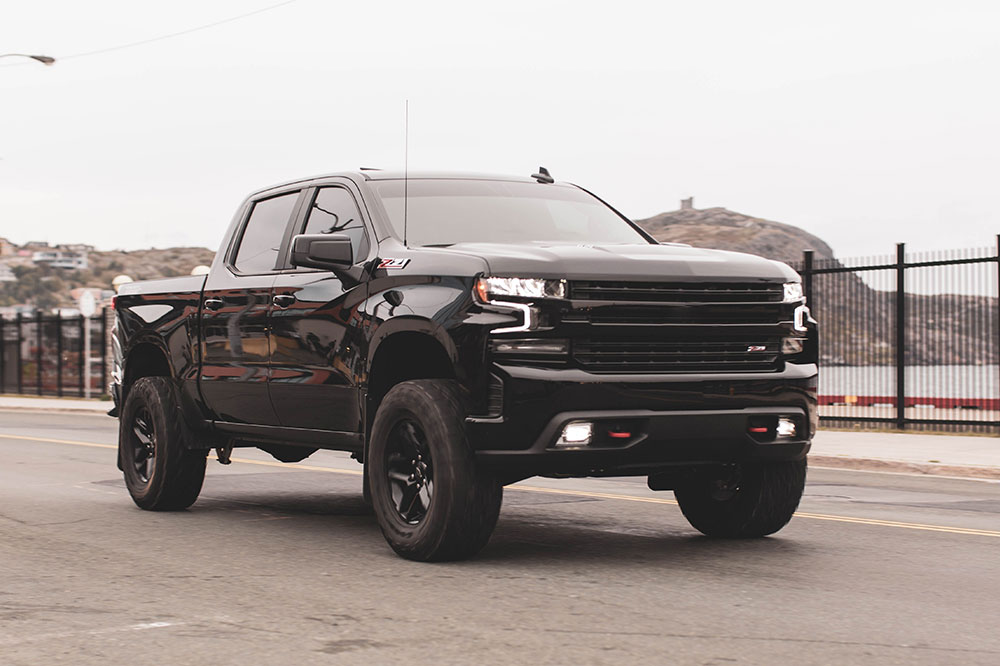
Chevrolet has been a household name in the automobile industry for over a hundred years now. The auto giant earned a reputation for manufacturing some of the best pickup trucks in recent years and the Silverado series is one stellar example. The Chevrolet Silverado 1500 is by far the strongest and technologically advanced pickup designed to get the job done, period! A bigger engine, better transmission, and stellar off-road capabilities rank the 1500 trims in a class of its own.
Here are some of the key highlights of the pickup truck.
Trims
The Chevy Silverado 1500 is a true commercial workhorse that offers eight trim variants and three custom special editions. The heavier V8 engine trims can haul heavy loads for long distances, while the lighter Turbo trims offer the best fuel economy in its class. Towing and trailering also play an important role when it comes to choosing a trim variant.
Engine and transmission
The bigger the engine block, the more powerful is the pickup. You get multiple options for engines, including your standard V6 or V8 and the more fuel-efficient Duramax® Turbo-Diesel. The Silverado 1500 comes with a 4.3L V6, 5.3L V8, or a 6.2L V8, all great engine blocks for the heavy trims. On the other hand, the 2.7L Turbo and 3.0L Duramax® Turbo are the more fuel-efficient options. The pickup also features 6-speed, 8-speed, and 10-speed automatic transmission options suitable for different size engine blocks. The Hydra-Matic® 10-speed automatic transmission has shorter gears to improve efficiency while shifting the power from lower to higher gears.
Four-wheel-drive
Most of the premium trims of the Silverado 1500 offer a 4-wheel-drive. The drivetrain is what transfers the power from the engines to the wheels. 4-wheel drives do offer a better grip in questionable weather and terrain conditions. Granted, it is a slightly more premium option to consider but it is worth the price, especially if you are in the long haul business driving cross country. A 4×4 is definitely a much better option for heavy towing and trailering.
Drive modes
The 2020 Chevrolet Silverado 1500 offers custom drive modes that modify the vehicle’s throttle and handling response. This is a cool feature that adjusts your ride experience depending on the driving and terrain conditions. The Silverado offers normal, tow/haul, sport, off-road, terrain, and snow/ice drive modes to adjust the power and traction accordingly. All this can be done with the simple turn of a dial on the Drive Mode Selector.
Off-road capabilities
The premium trims of the Chevrolet Silverado 1500 are designed to handle off-road and rough terrains thanks to the Z71-off Road package installation. Premium Rencho® Shocks smooth out a bumpy ride while the hill descent control ensures driving safety on steep grades. A metal underbody shield, all-terrain tires, and automatic locking rear differential further ensure better off-road capabilities.