Home > Health
5 common peeing mistakes that cause bladder problems

5 common peeing mistakes that cause bladder problems

Peeing is an automatic reflex that is triggered when the bladder becomes full. The kidneys work hard to filter out unwanted toxins and fluids from the body and evacuate these liquids into the bladder that holds the urine. With a normal fluid intake of 2 liters per day, the average adult pees about 800 to 2000 milliliters in a 24-hour cycle. But despite peeing being a regular activity, some people tend to make the following mistakes. Holding pee for a prolonged duration One of the main functions of urination is to help the body evacuate toxins that are filtered out by the kidneys from the bloodstream. So, holding it in actually increases the risk of urinary tract infections caused by the bacteria and toxins in the urine. It also puts pressure on the kidneys, disrupting normal function and increasing the risk of kidney stones developing in the organ. Following urinary voiding It may not be possible to use the restroom multiple times with certain jobs. So many people develop a habit or schedule to urinate at fixed times during the day. This is referred to as preventive voiding, where one learns to control one’s bladder and urine output. While it is not something that can cause major bladder problems, it’s also a habit that should not be prolonged.
Read More

10 mistakes to avoid when selecting Medicare coverage

10 mistakes to avoid when selecting Medicare coverage

People living in the country aged 65 and above can opt for federal health insurance assistance in the form of Medicare, which covers comprehensive costs for known treatments. Even some younger individuals with disabilities or those diagnosed with end-stage renal disease are eligible for Medicare plans. It is divided into four parts and covers everything from hospitalization expenses to the cost of prescriptions. Here are ten common mistakes to avoid while enrolling for Medicare. Enrollment mistakes Medicare benefits become available as soon as a person turns 65. So, it is always beneficial to apply for Medicare policies in the initial enrollment period, open only for a fixed time. Enrolling late can lead to an increase in premiums that would have been otherwise affordable. Signing up for automatic renewals Never voluntarily opt for automatic renewal, as one can switch up plans and avail benefits under a different policy that can be changed once a year. So, consider the premiums, deductibles, and copayments and see if the new policy is worth it. Taking plans only for the premiums Premiums are just one aspect of the total cost of paying for insurance. One must also compare policy benefits, even if it means paying slightly higher premiums.
Read More
15 critical details to know about Medicare coverage

15 critical details to know about Medicare coverage

Medicare is a federal primary insurance program that is offered to elderly seniors. It is available for both working and retired seniors as a benefit to pay for rising healthcare costs. Even young adults suffering from a disability or those diagnosed with end-stage renal disease can avail of this benefit. Medicare is a complicated insurance program that entitles many tricky terms and conditions. Here are 15 essential things you should know about Medicare. It’s a government-sponsored insurance Medicare is something that you can additionally avail over any existing insurance plans to provide coverage for treatment. You need to apply before you turn 65 Applications start three months before you turn 65 and end four months post your 65th birthday, giving you seven months to enroll for the plans. There are four parts Medicare is divided into four main parts, with Part A and B forming the original Medicare. Original covers both the inpatient and outpatient needs, whereas Parts C and D are special advantage plans that help cover special costs and prescriptions. You can choose between Original and Advantage plans Original Medicare only covers Part A and B, with an option to choose Part C to pay for prescriptions. Or choose Part C with optional D coverage.
Read More
5 common mistakes to avoid while taking supplements

5 common mistakes to avoid while taking supplements

Foods and beverages provide the necessary nutrients to support physical and mental activity for growing children and adults. However, the body gradually loses its ability to break down foods and beverages to extract and absorb nutrients effectively with advancing age. Even some underlying health complications can trigger nutritional deficiencies, forcing one to take supplements extracted from natural foods and beverages. Here are five crucial mistakes to avoid while taking supplements: Taking too many supplements The body can absorb and process only a finite amount of nutrients daily. So, taking more can trigger unnecessary complications without any of the inherent benefits of supplementing. More is not always healthy, especially regarding supplements made from synthetic extracts. Also, not all vitamins, minerals, and nutrients can be taken at once since mixing supplements has multiple side effects, even the most basic ones for boosting immunity and overall metabolism. Combining the wrong supplements together Never take calcium and iron supplements together, as calcium lowers the body’s ability to absorb iron effectively. The same applies to magnesium and calcium, which should never be taken together. It’s alright to take them apart at long intervals. Vitamin C is great for boosting immunity, and vitamin B12 helps boost energy and cognitive function and improve mood.
Read More
Signs and risk factors of increasing levels of cholesterol

Signs and risk factors of increasing levels of cholesterol

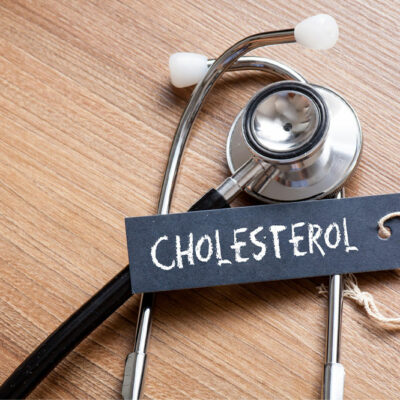
Cholesterol is a waxy, fat-like substance that is produced by the liver. It helps in the formation of cell membranes, hormones, and vitamin D. Although cholesterol is needed by the body, too much of it can cause multiple health problems, especially for the heart. Moreover, since cholesterol cannot travel through the body, particles called lipoproteins do the job. Let’s understand these in detail and learn about the symptoms of increasing cholesterol levels. Forms of lipoproteins LDL is a form that makes up most of the cholesterol found in the body. However, too much of LDL puts the heart at a high risk of developing diseases like stroke and other cardiovascular diseases. The high build up of LDL on the walls of the arteries is called plaque. HDL absorbs the cholesterol in the blood and brings it back to the liver. This is then flushed out of the body, therefore, higher levels of HDL are considered to be good for one’s health. Symptoms of increasing cholesterol levels There are no specific early signs of increasing cholesterol levels; however, one should always be observant of the body’s responses to food, environment, and activities. In most cases, high cholesterol is only observed too late when it is already affecting the body with health illnesses like a stroke or heart disease.
Read More
8 warning signs of a seizure

8 warning signs of a seizure

The brain is the most complex organ in the human body and controls all movements, functions, and responses. It comprises a network of nerves that sends and receives vital signals to the body. However, any abnormal activity in this electrical impulse can trigger seizures. Some people only experience mild seizures, while others develop chronic seizure disorders like epilepsy. Here are the warning signs of a seizure to look out for prevention: Cognitive symptoms Minutes before the seizure, one might experience multiple discomforts that affect cognition, for example, confusion and anxiety, starting with a general feeling of uneasiness. Some people also experience headaches and become irritable before a seizure. Abrupt movements Uncontrolled movements, like sudden jerking of the arms or legs, are also warning signs of a seizure. A developing seizure will disrupt vital communication signals from the brain that control gross motor skills. One might even experience physical uneasiness that causes the body to become stiff. No balance Losing consciousness is also one of the precursors to developing seizures. A person may blackout moments before the seizure kicks in and fall suddenly, having no control over balance or gross motor skills. Falls are commonly associated with severe seizures, but a person might feel dizzy right before the seizure, which affects overall balance and consciousness.
Read More
5 harmful household products that can affect human eyes

5 harmful household products that can affect human eyes

There are probably several things in your house that have the potential to harm your eyes if you don’t take adequate precautions. You need to be extra careful, especially when you have kids around the house. While some of these products can be done away with, most are often considered essentials. So you’ll have to take action appropriately and store the essentials as required. Here’s a list of harmful household products that could hurt your eyes. Household cleaners Nearly all household cleaners you buy from the supermarket contain tons of chemicals, including bleach and ammonia. Both of these irritate the eyes. From floor cleaners to window cleaners, floor polishing waxes, furniture polish, drain cleaners, toilet cleaners, bathroom cleaners, multi-surface cleaners, and glass and mirror cleaners can contain these chemicals. This is why it is always important to read the labels and follow the usage and storage instructions. Use these products in a well-ventilated space with the spray nozzle pointed away from you. Vinegar Vinegar is one of the most versatile and useful household products. You not only use it while cooking but also for getting rid of stains and other purposes. However, you need to be careful while using it.
Read More
5 household items that may cause cancer

5 household items that may cause cancer

While daily tasks have become easier with the invention of products that help keep homes safe and increase efficiency, it is important to know the risks of such seemingly harmless everyday items. While some household products can pose physical harm due to their design, many have been linked with an increased risk of diseases like cancer. One should also lower the risk of being exposed to carcinogens found in daily objects and find safer alternatives. Scented candles Many scented candles available today are made with products like petroleum, paraffin, and perfumes. Because of these ingredients, when the candle is lit and the burning process starts, the fragrance one can smell is just harmful chemicals and smoke. These chemicals have carcinogenic properties that are harmful to the body. So, one should check the ingredients in such products and avoid using them too often. One can always choose candles made using soy wax, which is a healthier alternative. Asbestos roofing and insulation Asbestos is a group of naturally occurring fibrous minerals known to be resistant to heat and corrosion. Because of these unique properties, asbestos is used extensively, for example, in insulation, fireproofing materials, wallboards, and automotive brakes. The risk here rises when fibers break and can easily be breathed in and get lodged inside the lungs.
Read More
4 common mistakes made when measuring blood pressure

4 common mistakes made when measuring blood pressure

Blood pressure measures the force or pressure of the blood in the arteries. These readings are given in systolic and diastolic numbers. The systolic pressure (top number) is the maximum heartbeat pressure, and the diastolic pressure (bottom number) is the amount of pressure in the arteries between beats. A typical healthy average reading is less than 120/80 mm Hg. When measuring blood pressure, one must be careful and avoid making common mistakes, such as: Using the wrong-sized cuff One of the most frequently occurring mistakes is using the wrong cuff size. A large cuff will give falsely low readings, while a smaller cuff will give falsely high readings. According to the American Heart Association’s blood pressure measuring guidelines, the length and width of the cuff should be 80 and 40 percent of the arm circumference, respectively. Generally, doctors carry three cuff sizes – large adult, regular adult, and pediatric – that fit a majority of the population. However, doctors working with younger patients may require multiple smaller-sized cuffs. Incorrect patient positioning Getting accurate blood pressure measurement also requires the patient to be seated properly. For instance, a poorly supported back or feet may increase a reading by six to ten points, an unsupported arm may raise it by ten points or more, and sitting with one’s legs crossed may raise it by two to eight points.
Read More
8 most common signs of poor kidney function

8 most common signs of poor kidney function

The kidneys play a vital role in maintaining the body’s equilibrium by filtering waste, regulating fluid balance and electrolyte levels, and producing hormones essential for various bodily functions. Any impairment in kidney function due to various reasons can lead to a range of symptoms. Some early indicators may suggest compromised kidney function. Understanding these signs can enable individuals to take proactive steps, seek medical assistance promptly, and minimize the risk of further complications. Signs of poor kidney function Changes in urine color, smell, and consistency If one notices any changes in the color, frequency, or smell of one’s urine, it is usually considered an early sign of kidney disorder. One may experience an increased need to urinate, especially at night, which can disrupt normal sleep patterns. Conversely, one may see a significant decrease in one’s urges to urinate, which leads to a buildup of waste products and fluid retention in the body. Similarly, if one’s urine smells foul or has changed color to dark, foamy, or bloody, it may be a cause for concern. Changes in appetite and taste Poor kidney function can impact the digestive system, and individuals may experience a persistent metallic taste in the mouth or a significant loss of appetite.
Read More
Showing 241-250 Results of 366

2324252627

  • About Us
  • Contact Us
  • Privacy Policy
  • Advertiser Information
  • Terms of Service

© 2025 GoodBandwidth.com. All Rights Reserved.

e