6 things to consider when choosing a business telecom provider
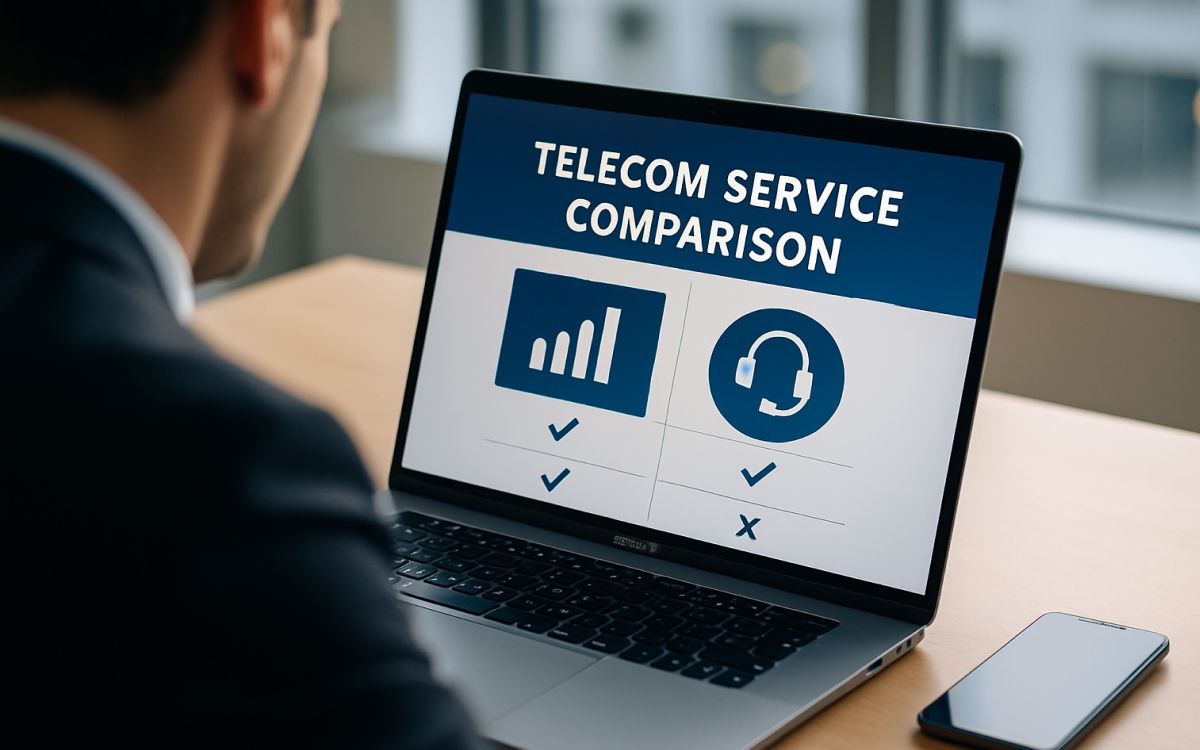
Treating telecom as merely basic broadband is a risky, outdated approach in today’s market. Modern businesses need modern telecom solutions to maintain a competitive advantage. Today, these services determine how companies communicate, collaborate, and serve customers. Any company working toward rapid growth has a telecom system that is flexible and easy to integrate. Choosing the right telecom service provider is essential, as their services play a critical role in driving team productivity and customer satisfaction.
Type of provider
Telecom service providers are often categorized by their service type, with many specializing in high-speed internet access. Among these, fiber-optic technology is the industry standard for speed and reliability. It offers superior speed and stability compared to traditional copper cables. This makes it useful for businesses that rely on consistent cloud-based systems for frequent, large-file transfers. Telecom voice service providers are great for business modules that rely on voice calls. However, as traditional landlines are being phased out, businesses are increasingly adopting Voice over Internet Protocol (VoIP) systems for more cost-effective, flexible communication. These internet-based, cloud-hosted systems offer advanced features like voicemail-to-email and call forwarding. So, they are a great choice for businesses that need advanced communication capabilities.
Security
Safety and reliability are paramount when considering a telecom service provider for a business. It is best to choose an option that provides comprehensive network security. Think of the kind of coverage and security each provider has to offer. Check how the provider collects, stores, and protects user data, the encryption standards it follows, and its regulatory compliance requirements.
Scalability and flexibility
As the business grows, it is important that its telecom needs also be met. Start by investing in telecom service providers that offer scalable services. This ensures the services expand alongside the business. For instance, certain telecom connections may be better suited for companies operating globally without a primary office. On the other hand, expanding businesses might want affordable, secure, and reliable connections to manage data and network traffic across multiple locations.
Technology
To drive growth and streamline product delivery, businesses need a dedicated, scalable communication system. Such solutions also help handle higher call volumes and ensure seamless connectivity, both internally and with customers. Poor communication can disrupt operations, leading to frequent downtime. This further reduces productivity and affects customer trust. So, companies must compare plans, ask questions, and select a provider whose services align with their long-term business goals. Some questions to ask include how the carrier responds during power outages, the type of setup they have, their office locations, and acceptable network performance expectations. It is important to take the time to research possible options to find a provider that is affordable and reliable.
Integration
Most enterprise communication services are no longer interested in operating in isolation. They are likely to be connected to a CRM system that includes collaboration platforms and ticketing tools. This could mean employees do not need to log calls into customer records manually. The CRM system can also support employee teams with instant access to log histories, notes, and a conversion metrics platform to help sales teams. These integration systems can help eliminate manual tasks and streamline workflows. When these systems are integrated and can work with third-party applications, they deliver more value than an isolated phone system can.
Customer support
Issues are not completely unavoidable; the key is to pick a service provider that does not leave the business hanging in times of need. This highlights the importance of a service provider with reliable customer service. These providers respond quickly to issues and significantly reduce the system’s downtime. System failures can disrupt operations and affect revenue, but a proactive provider keeps the business running. Try to stick with a telecom service provider that can offer round-the-clock support and fast solutions.